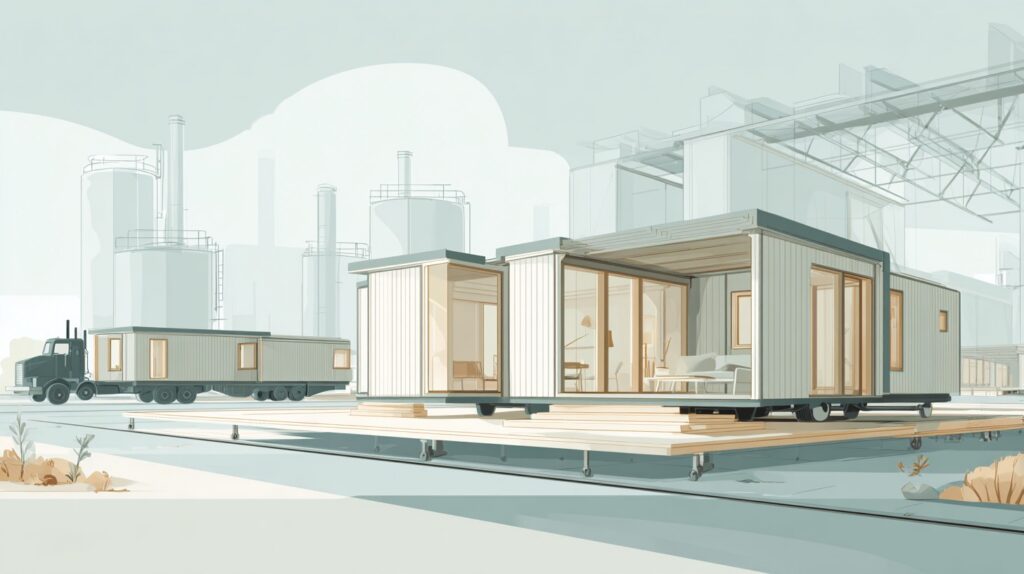

How long does it take to go from order to move-in with a prefab home? This is one of the most important questions buyers ask when comparing prefab construction to traditional site-built homes. Many people assume prefab means “fast,” but the real timeline depends on design decisions, permitting, site conditions, and local regulations.
In most cases, the full process from signing a contract to receiving a certificate of occupancy takes 6 to 12 months. Some projects move faster. Others take longer. Understanding each stage of the prefab moving timeline helps set realistic expectations and reduces the risk of delays.
Overview: The Typical Prefab Home Timeline
While every project varies, most prefab homes follow a sequence similar to this:
- Research and builder selection
- Design finalization and contract signing
- Permits and engineering approval
- Site preparation and foundation work
- Factory production
- Delivery and on-site assembly
- Final inspections and move-in
Some stages can overlap. Others depend entirely on local zoning departments or weather conditions. The factory build itself is often only a small portion of the total timeline.
Stage 1: Research and Builder Selection (2–8 Weeks)
Before ordering a prefab home, buyers typically spend several weeks researching options. This includes reviewing modular homes, panelized systems, prefab ADUs, or even barndominiums depending on goals.
Using a regional directory such as PrefabNearMe can help narrow options to builders who actively serve your area. This is important because not all national prefab companies operate in every state or county.
During this stage, buyers usually:
- Compare floor plans
- Request preliminary pricing
- Verify zoning compatibility
- Review licensing and credentials
Moving too quickly here can create problems later. Taking time to vet prefab home builders near you often prevents delays during permitting or installation.
Stage 2: Design Finalization and Contract (3–8 Weeks)
Once a builder is selected, the design phase begins. Some prefab companies offer standardized plans with minor modifications. Others allow more customization.
Factors that affect this phase:
- Level of customization
- Structural engineering requirements
- Energy code compliance adjustments
- Financing approval timelines
Highly customized homes typically require additional review and engineering, which can extend this stage.
Stage 3: Permits and Zoning Approval (4–16 Weeks)
Permitting is often the most unpredictable part of the prefab moving timeline.
Even though much of the home is built in a factory, local building departments still require:
- Stamped engineering drawings
- Site plans
- Foundation plans
- Energy compliance documentation
In some counties, permits are issued within a month. In others, reviews may take several months depending on workload and complexity.
Zoning restrictions can also affect timing. Setback requirements, HOA approvals, and environmental regulations sometimes require revisions before permits are granted.
Stage 4: Site Preparation and Foundation (3–8 Weeks)
While the home is being prepared in the factory, site work typically begins. This stage includes:
- Land clearing and grading
- Excavation
- Foundation pouring
- Utility trenching
Weather, soil conditions, and contractor availability influence this phase. In colder climates, frozen ground can delay excavation. In rural areas, well and septic installation may extend the timeline.
Importantly, site work costs and timing are similar whether building prefab or traditional homes.
Stage 5: Factory Production (6–12 Weeks)
Factory construction is where prefab homes often gain efficiency.
Inside a controlled environment, crews build modules or panels while site work progresses simultaneously. Because weather delays are minimized, production schedules are typically more predictable than site-built framing.
However, factory timelines depend on:
- Current production backlog
- Supply chain conditions
- Complexity of the design
During busy seasons, production slots may be scheduled months in advance.
Stage 6: Delivery and On-Site Assembly (1–3 Weeks)
Once modules are complete, they are transported to the property. Delivery involves:
- Specialized hauling permits
- Cranes for module placement
- Structural fastening and sealing
For modular homes, the main structure can often be set within a few days. However, additional work follows, including:
- Interior drywall finishing
- Roof seam completion
- Exterior siding connections
- Mechanical system hookups
This finishing work may take several weeks depending on scope.
Stage 7: Inspections and Final Approval (2–6 Weeks)
Before move-in, local inspectors must approve:
- Electrical systems
- Plumbing connections
- HVAC systems
- Structural compliance
After passing inspections, the municipality issues a certificate of occupancy. Only then can the home legally be occupied.
Total Estimated Timeline
For many buyers, the realistic expectation is:
- Best case: 6–7 months
- Typical range: 8–10 months
- Complex or high-regulation areas: 10–12+ months
Projects in rural areas with straightforward permitting may move faster. Projects in high-demand urban markets may take longer.
Cost Considerations Related to Timeline
Longer timelines can increase overall costs. Buyers should consider:
- Construction loan interest payments
- Temporary housing expenses
- Rate lock expiration risks
- Escalating material costs
Although prefab homes may shorten structural build time, financing and land holding costs still accumulate during the permitting and preparation phases.
Pros and Cons of Prefab Timelines
Advantages
- Reduced weather-related framing delays
- Overlapping site and factory work
- More predictable production schedules
Limitations
- Permit timelines remain unchanged
- Site preparation can create delays
- Delivery logistics require coordination
Common Misconceptions About Prefab Move-In Timing
“Prefab means I can move in within a few months.”
While factory production is efficient, the overall process includes many local steps that cannot be skipped.
“Permits are faster for prefab.”
In most municipalities, modular homes must meet the same residential building codes as traditional homes.
“The house arrives finished and ready to live in.”
Interior finishing, utility hookups, and inspections are still required after delivery.
How Location Affects the Timeline
Searching for prefab homes near me often reveals that timelines vary significantly by region. Factors include:
- Local zoning rules
- HOA requirements
- Weather patterns
- Contractor availability
Working with builders who regularly operate in your county helps reduce unexpected regulatory delays.
Frequently Asked Questions
Is prefab faster than traditional construction?
Prefab can reduce on-site build time, but total project length depends on permits and site preparation.
Can site work happen before permits are approved?
In most jurisdictions, major construction activities require permits before beginning.
Does customization extend the prefab timeline?
Yes. Structural changes and custom finishes often require additional engineering and factory scheduling time.
What is the fastest way to move in?
Choosing a standardized floor plan, building on a developed lot, and working with experienced local contractors can help streamline the process.
Final Thoughts
The prefab moving timeline is often shorter in certain phases compared to traditional construction, but it is not instant. From order to move-in, most projects take between six and twelve months depending on location, permitting, and site conditions.
Taking time to research local builders, confirm zoning compatibility, and understand each stage of the process will provide a clearer expectation. For buyers comparing options, reviewing providers that serve your region and understanding how their timelines align with local regulations is a practical next step.