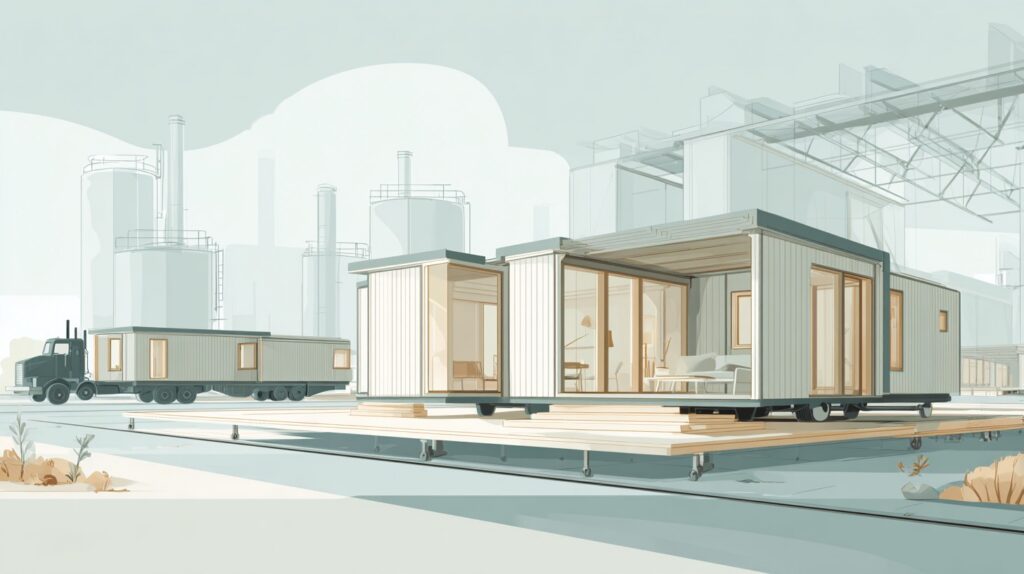

Buying land in a rural or hard-to-access location often raises one big question early in the process: how does a modular cabin actually get there? Delivery logistics are one of the most important and least understood parts of building a modular cabin on remote land. Access roads, terrain, weather, and local regulations all play a role, and misunderstandings here can lead to delays or unexpected costs.
This article explains, step by step, how modular cabins are delivered to remote sites, what buyers should plan for ahead of time, and where common challenges arise. The goal is to provide clear, practical information so buyers can evaluate whether a modular cabin is a good fit for their land.
What “Modular Cabin Delivery” Actually Means
Modular cabins are built in sections, or modules, inside a factory. Once construction is complete, those modules are transported to the building site and assembled on a permanent foundation.
Delivery is not a single event. It is a coordinated process that typically includes:
- Transportation of modules by truck
- Temporary staging near the site
- Craning modules onto the foundation
- On-site assembly and finishing
In remote areas, each of these steps requires more planning than on a suburban lot.
Evaluating Access to Remote Land
Road Width, Grade, and Condition
The most important factor in delivery is access. Modular cabin modules are large and heavy, often transported on long flatbed trailers.
Builders typically evaluate:
- Road width and turning radius
- Steep grades or sharp curves
- Bridge weight limits
- Seasonal road conditions
Gravel roads, private drives, and forest service roads are common in remote areas. These can be workable, but may require upgrades before delivery.
Driveway and Site Access
Even if public roads are adequate, the final approach to the site often determines feasibility.
Common requirements include:
- A cleared driveway with sufficient width
- A stable base that can support heavy trucks
- A turnaround or pull-off area
In some cases, buyers need to invest in driveway improvements before delivery.
How Modular Cabins Are Transported
Truck Transportation
Most modular cabins are delivered by specialized trucking companies experienced with oversized loads.
Key considerations include:
- Module size and weight
- Number of modules
- Distance from the factory
Remote sites increase transportation complexity but do not automatically rule out delivery.
Permits and Escorts
Oversized loads often require transportation permits. In some regions, escort vehicles are required.
These requirements depend on:
- State and local regulations
- Module dimensions
- Travel routes
Builders or transport companies typically manage permitting, but costs are passed through to the buyer.
Cranes and On-Site Assembly
Why Cranes Are Used
Once modules arrive on site, a crane is usually required to lift them onto the foundation.
Crane planning considers:
- Reach and lifting capacity
- Ground stability
- Proximity to the foundation
In remote areas, crane access can be one of the biggest challenges.
Preparing the Crane Pad
Cranes require a stable, level surface. This often means:
- Clearing vegetation
- Compacting soil or adding gravel
- Creating temporary access pads
These preparations are typically part of site work and should be planned early.
Foundations in Remote Locations
Foundation Types
Modular cabins are placed on permanent foundations, even in remote areas. Common options include:
- Concrete crawlspaces
- Basements
- Pier or piling systems
The foundation must be completed before delivery.
Timing Matters
Foundation readiness is critical. Delays here can cause storage or rescheduling costs if modules are already built.
In remote climates, weather can affect excavation and curing timelines.
Delivery Timeline in Remote Areas
Factory Build vs Site Readiness
One advantage of modular construction is parallel progress. The cabin is built in the factory while site work happens simultaneously.
In remote locations, this coordination becomes more important because access windows may be limited by weather.
Seasonal Constraints
Remote sites often have shorter delivery seasons.
Common constraints include:
- Snow or mud in spring and fall
- Frozen ground limiting excavation
- Restricted access roads
Planning delivery during favorable conditions reduces risk.
Cost Considerations for Remote Delivery
Transportation Costs
Delivery to remote land often costs more than delivery to accessible lots.
Factors that influence cost include:
- Distance from the factory
- Road conditions
- Number of modules
Site Preparation Costs
Remote sites may require additional work such as:
- Driveway construction
- Tree clearing
- Temporary access improvements
These costs are not unique to modular cabins but are often more visible because delivery requirements are specific.
Common Misconceptions About Remote Delivery
“Modular Cabins Can’t Be Delivered to Remote Land”
Many modular cabins are successfully delivered to rural and remote sites. The key is planning, not location alone.
“The Factory Handles Everything”
Builders handle module construction and coordination, but buyers are often responsible for site readiness.
“Delivery Is the Biggest Risk”
In practice, access and foundation preparation cause more delays than transportation itself.
Zoning, Permits, and Local Rules
Remote land is still subject to zoning and building regulations.
Considerations include:
- Local building permits
- Environmental or land use restrictions
- Road use or weight limits
Early conversations with local authorities help prevent last-minute issues.
Pros and Cons of Modular Cabins on Remote Land
Advantages
- Controlled factory quality
- Shorter on-site build time
- Reduced weather exposure during construction
Tradeoffs
- Higher delivery and access planning requirements
- Limited flexibility once modules are built
- Upfront site preparation costs
Frequently Asked Questions
Can modular cabins be delivered to off-grid locations?
Yes, provided access roads can support delivery and crane setup.
What happens if trucks can’t reach the site?
In rare cases, smaller modules or alternative staging locations are used, but this increases complexity.
Do all modular cabins require cranes?
Most do, especially multi-module designs.
Is remote delivery more expensive than site-built construction?
It depends. Modular delivery can offset some costs by reducing on-site labor time.
Final Thoughts
Delivering a modular cabin to remote land is entirely feasible, but it requires thoughtful planning. Access evaluation, site preparation, and coordination with experienced builders make the process predictable rather than risky.
For buyers willing to plan ahead, modular cabins remain a practical option for remote and rural properties. Exploring delivery requirements early helps ensure the cabin fits both the land and the budget.