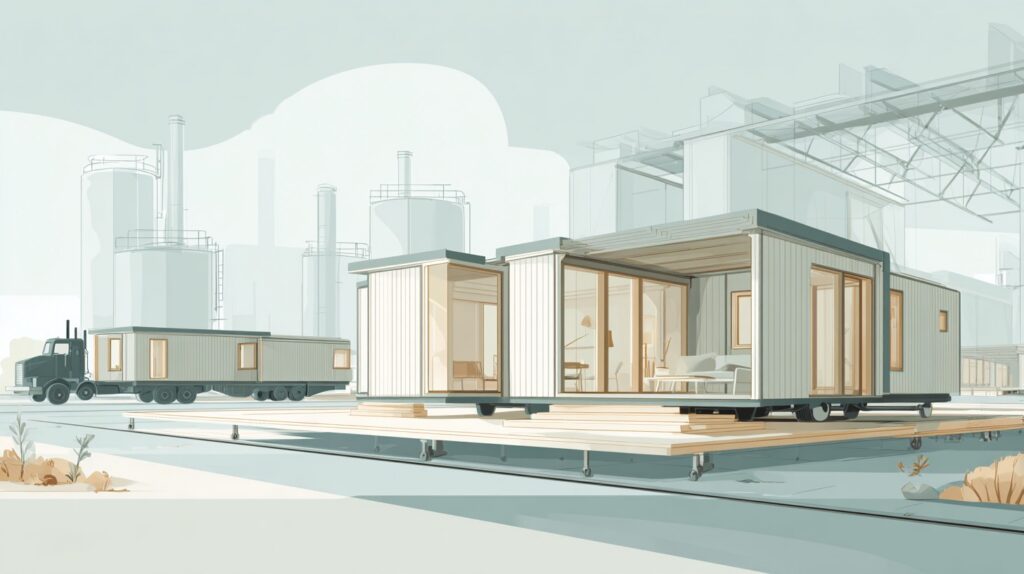

Are prefab homes a good option for rural or remote land? In many cases, yes. Prefabricated homes are often well-suited for rural property because much of the construction happens in a factory, reducing the amount of on-site labor required. However, building on remote land introduces logistical, utility, and permitting challenges that must be carefully evaluated.
If you are considering placing a prefab home on rural acreage, wooded land, farmland, or an off-grid parcel, understanding how site access, infrastructure, and local regulations affect your project is essential. A prefab system can simplify certain aspects of construction, but it does not eliminate the realities of rural development.
Why Prefab Homes Appeal to Rural Landowners
Rural properties often lack access to large construction crews, consistent weather windows, or nearby material suppliers. Because prefab homes are largely built indoors in controlled factory settings, they can reduce some of these variables.
Common Advantages in Rural Settings
- Less on-site framing time
- More predictable construction quality
- Reduced exposure to weather delays
- Potentially fewer subcontractors traveling long distances
For landowners located far from urban centers, this controlled production process can offer meaningful logistical benefits.
Transportation and Site Access Considerations
One of the most important rural factors is delivery access. Modular homes are transported in large sections by truck. Before committing to a builder, evaluate whether your property can accommodate delivery vehicles and cranes.
Questions to Ask
- Is there adequate road width for large trucks?
- Are there tight turns or steep grades?
- Is temporary road improvement required?
- Is crane access possible near the foundation site?
In some remote areas, temporary road grading or tree removal may be necessary. These site preparation costs should be factored into the overall project budget.
Utility Infrastructure on Remote Land
Rural properties often require independent utility systems. Prefab homes can accommodate these systems, but the design should account for them early.
Typical Rural Utility Needs
- Private wells for water
- Septic systems for wastewater
- Propane tanks for heating
- Solar or generator systems for power
Installing utilities may represent a significant portion of total project cost, sometimes exceeding the base price of the prefab structure itself.
Foundation Requirements
Prefab homes typically require permanent foundations, especially modular homes built to local building codes. Rural soil conditions may vary widely, so a soil test is often recommended.
Common rural foundation options include:
- Slab-on-grade foundations
- Crawl spaces
- Full basements
- Pier foundations in certain terrains
Foundation choice depends on climate, soil stability, frost depth, and budget.
Cost Considerations for Rural Prefab Builds
While prefab construction can reduce framing time, rural builds may introduce additional expenses.
Potential Additional Costs
- Extended transportation fees
- Crane mobilization in remote areas
- Road improvements
- Well drilling and septic installation
- Long utility trenching distances
It is common for rural infrastructure costs to represent a substantial portion of the total project budget. Comparing prefab builders near me using tools like PrefabNearMe can help identify companies experienced in rural installations.
Timeline Expectations
Prefab homes can shorten certain construction phases, but rural permitting and site preparation may extend the overall timeline.
The typical sequence includes:
- Land evaluation and soil testing
- Permit approval
- Utility planning
- Foundation installation
- Factory production
- Delivery and set
- Utility hookup and finishing
Permit approval in rural areas may be simpler than in dense urban zones, but this varies significantly by county and state.
Zoning and Land Use Rules
Rural land does not automatically mean unrestricted development. Many counties have zoning classifications that dictate:
- Minimum dwelling size
- Setback distances
- Accessory dwelling unit allowances
- Manufactured home restrictions
Some agricultural zones allow modular homes but may restrict certain manufactured housing types. Always confirm local regulations before purchasing a prefab system.
Pros and Cons of Prefab Homes on Rural Land
Advantages
- Reduced on-site labor time
- Consistent factory quality control
- Often well-suited for off-grid systems
- Flexible design options including modular homes and barndominiums
Challenges
- Transportation logistics
- Utility installation complexity
- Infrastructure costs
- Weather and terrain limitations
Whether prefab is the right solution depends on property characteristics and budget planning.
Climate Considerations
Rural land may be exposed to more extreme climate conditions. Prefab homes can be engineered for snow loads, high winds, or hot climates, but specifications must match the region.
When evaluating builders, confirm:
- Energy code compliance
- Insulation specifications
- Wind and snow load ratings
These details are particularly important in open rural environments with less natural wind protection.
Common Misconceptions
“Prefab homes are only for urban lots.”
In reality, modular homes are frequently installed on rural land, provided access and infrastructure are feasible.
“Rural means no permits.”
Most counties require permits for foundations, septic systems, and electrical installations.
“Factory-built means no site work.”
Site preparation remains a critical part of rural development.
Choosing the Right Builder for Rural Projects
Experience with remote land projects matters. Builders familiar with rural construction often understand:
- Utility coordination challenges
- Transportation logistics
- Local zoning rules
- Soil and terrain variations
Using structured comparison tools like PrefabNearMe can help identify builders who specialize in rural or off-grid installations, making it easier to evaluate experience and service scope.
Frequently Asked Questions
Can prefab homes be off-grid?
Yes. Many prefab systems can integrate solar panels, battery storage, wells, and septic systems.
Are prefab homes cheaper on rural land?
It depends. While factory construction can reduce some labor costs, infrastructure expenses may offset savings.
Is it harder to get financing for rural prefab builds?
Financing can vary by lender and property type. Land loans and construction loans may have additional requirements.
Do modular homes perform well in rural climates?
When properly engineered for the region, modular homes can meet the same building standards as site-built homes.
Final Thoughts
Prefab homes can be a practical option for rural or remote land, particularly when factory construction reduces on-site complexity. However, transportation logistics, infrastructure planning, and local zoning rules play a significant role in project feasibility.
Careful research, realistic budgeting, and comparing experienced regional builders will help determine whether a prefab home aligns with your land and long-term goals.