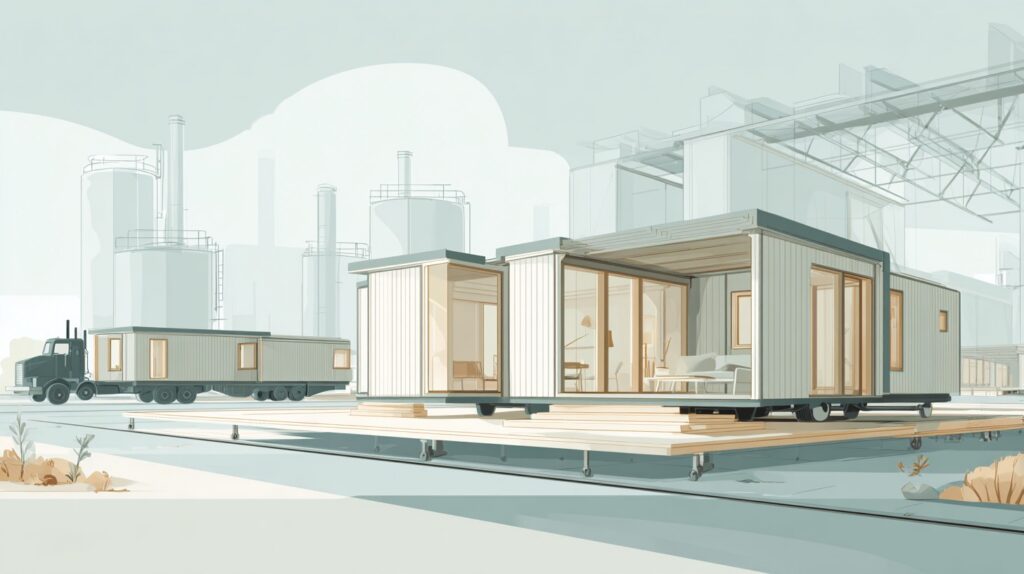

Can you finance a prefab or modular home like a normal mortgage? This is one of the most common and important questions buyers ask when considering modular homes, panelized systems, or other prefab housing options. Financing affects everything from your budget to your build timeline, and misunderstandings can delay projects or limit your choices.
The short answer is: often yes, but it depends on the type of prefab home, the lender, and how the project is structured. Modular homes that meet residential building codes are frequently eligible for traditional mortgage financing. Other prefab types may require different loan structures. Understanding these distinctions helps buyers plan realistically and avoid surprises.
Understanding the Different Types of Prefab Homes
Not all prefab homes are financed the same way. The term “prefab” covers several construction methods, and lenders evaluate them differently.
Modular Homes
Modular homes are factory-built in sections and assembled on a permanent foundation. They are constructed to the same local and state building codes as site-built homes.
Because they meet standard residential codes, modular homes are often eligible for conventional mortgages once completed.
Panelized and Kit Homes
Panelized homes are built in components and assembled on-site. Kit homes provide materials for on-site construction. Financing depends on how the project is structured and whether a licensed builder manages construction.
Manufactured Homes
Manufactured homes, sometimes referred to as HUD-code homes, are built to federal standards rather than local building codes. Financing options differ and may include chattel loans or specialized mortgage programs.
This distinction is critical when asking whether a prefab home can be financed like a normal mortgage.
When a Prefab Home Qualifies for a Traditional Mortgage
In many cases, modular homes can be financed similarly to site-built homes if they meet certain criteria:
- Built to local residential building codes
- Installed on a permanent foundation
- Titled as real property rather than personal property
- Located on land owned by the borrower
Once construction is complete and the home passes inspections, buyers may convert a construction loan into a standard mortgage.
However, during the build process, financing typically works differently than purchasing an existing home.
Construction Loans vs. Traditional Mortgages
Construction Loan Phase
Most prefab and modular home projects begin with a construction loan. This short-term loan funds:
- Factory production of modules
- Foundation work
- Site preparation
- Utility installation
- On-site assembly
Construction loans are usually disbursed in stages as work progresses. Interest accrues during construction.
Conversion to Permanent Mortgage
After completion and final inspection, the loan often converts into a traditional mortgage. At this point, buyers may qualify for conventional, FHA, VA, or other mortgage products depending on eligibility.
This two-step process differs from buying an existing home but can ultimately result in standard long-term financing.
Cost Considerations That Affect Financing
Lenders evaluate the total project cost, not just the factory-built portion of the home.
Costs typically include:
- Land purchase
- Foundation construction
- Site work and grading
- Utility connections
- Permit fees and inspections
- Delivery and crane services
Understanding full project costs helps determine loan size and required down payment. Buyers researching prefab homes near me should factor in local land values and municipal fees, which vary widely.
How Location and Zoning Influence Financing
Zoning regulations and local building requirements can affect lender confidence.
If a prefab home complies fully with residential codes and zoning standards, financing is often more straightforward. However, if a design resembles a nontraditional structure or is located in a restricted zone, lenders may require additional documentation.
Rural properties may present additional appraisal challenges due to limited comparable sales.
Researching builders and zoning compatibility through platforms like PrefabNearMe can help buyers identify projects more likely to meet lending standards in their region.
Common Misconceptions About Financing Prefab Homes
“Prefab homes cannot qualify for mortgages.”
Many modular homes qualify for standard mortgage products if built to local codes and permanently installed.
“You need to pay cash for prefab homes.”
Cash purchases are possible but not required in most modular home scenarios.
“Financing is identical to buying an existing home.”
The process typically involves a construction phase before converting to a permanent mortgage.
“All prefab types are treated the same.”
Lenders distinguish between modular, manufactured, and other prefab categories.
Pros and Cons of Financing Prefab Homes
Advantages
- Modular homes often qualify for competitive mortgage rates
- Appraisals may align with site-built homes of similar quality
- Permanent foundation installations support long-term value
Challenges
- Construction loan complexity
- Stricter documentation requirements
- Potential appraisal difficulties in rural or niche markets
Timeline Considerations
Financing timelines typically include:
- Pre-approval and land purchase
- Construction loan underwriting
- Factory build and site preparation
- On-site installation and inspections
- Conversion to permanent mortgage
Even though factory construction can reduce on-site time, permitting and loan approvals still influence the overall schedule.
Practical Steps for Buyers
To improve financing outcomes, buyers should:
- Consult lenders familiar with modular construction
- Confirm zoning compliance early
- Request detailed cost breakdowns from builders
- Understand appraisal requirements in their area
Exploring builder options and regional expertise through PrefabNearMe can help buyers identify companies experienced with local lenders and permitting processes.
Frequently Asked Questions
Can modular homes qualify for FHA or VA loans?
Many modular homes built to local codes and installed permanently may qualify, depending on lender requirements.
Do you need land before applying for a construction loan?
Most lenders require land ownership or a purchase contract before approving construction financing.
Is financing more expensive for prefab homes?
Interest rates for permanent mortgages are often comparable to site-built homes. Construction loans may carry slightly higher short-term rates.
Can you refinance a prefab home later?
If the home is permanently installed and titled as real property, refinancing is typically possible.
Final Thoughts
Financing a prefab or modular home can be similar to financing a traditional house, especially when the home meets local building codes and is installed on a permanent foundation. However, the process usually involves a construction loan phase before transitioning to a standard mortgage.
Understanding loan structure, total project cost, zoning compliance, and builder experience helps reduce uncertainty. Buyers who research carefully, compare regional options, and consult knowledgeable lenders can move forward confidently with a prefab project that fits both their housing goals and financing strategy.