
When buyers search for prefab homes near me, the phrase sounds simple. In practice, it is one of the most misunderstood parts of prefab construction. “Near me” does not usually mean a builder is down the street, and it does not always mean faster, cheaper, or easier.
This article explains what “near me” actually means in the prefab world, how delivery radius works, and why proximity is about more than miles on a map. Understanding this early helps buyers avoid unrealistic assumptions about cost, timelines, and feasibility.
Why “Near Me” Is Different for Prefab Homes
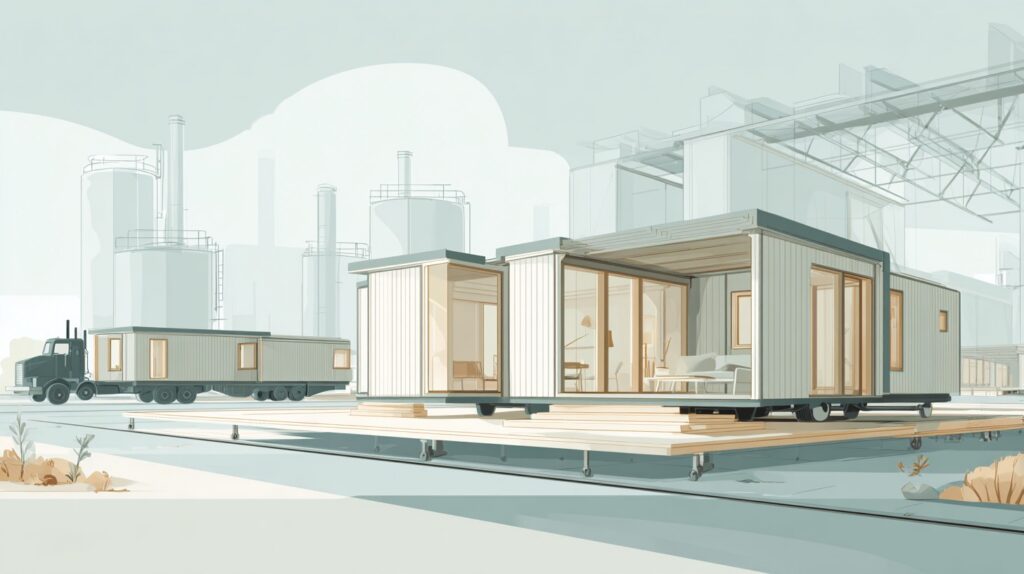
Prefab homes are built partially or fully off-site, which changes how location matters. Unlike traditional builders who work almost entirely on-site, prefab builders operate across regions and sometimes across multiple states.
As a result, “near me” usually refers to service area, not physical distance alone.
What Service Area Means in Practice
A prefab builder’s service area typically reflects where they:
- Regularly deliver homes
- Understand zoning and permitting processes
- Have experience with local inspectors and utilities
- Can reliably coordinate site work and installation
A builder located 300 miles away may be a better “near me” option than one 50 miles away if they already operate in your jurisdiction.
Factory Location vs Builder Location
One common misconception is that the prefab factory must be close to the build site. In reality, the relationship is more nuanced.
Factory Location
Factories are often centralized and serve large geographic regions. It is common for prefab homes to be delivered hundreds of miles from where they are built.
Factory distance mainly affects:
- Transportation cost
- Scheduling logistics
- Route planning for oversized loads
Builder or Installer Location
The builder or installation partner’s location often matters more than the factory’s. This is the team that:
- Coordinates site work
- Interfaces with local inspectors
- Manages the set and finishing work
This is why a builder listed as serving your state or region is often more relevant than a factory that happens to be nearby.
How Delivery Radius Actually Works
Delivery radius is not a fixed number. It varies by prefab type, road access, and builder policies.
Typical Delivery Considerations
- Distance from factory to site
- Road width, grades, and turning radius
- Overhead obstacles like power lines or bridges
- State-specific transport regulations
Two sites the same distance from a factory can have very different delivery costs based on access and terrain.
Modular Homes
Modular homes are transported in large sections. Delivery radius is influenced heavily by:
- Module size
- Crane access
- Escort requirements for oversized loads
Many modular builders deliver across multiple states, but costs increase as complexity increases.
Panelized and Component-Based Prefab
Panelized systems often have more flexible delivery ranges because components are smaller. This can make “near me” less restrictive from a transportation standpoint.
Prefab ADUs
Prefab ADUs often have tighter delivery constraints due to urban access, narrow streets, and permitting. In these cases, local or regional builders tend to matter more.
Cost Implications of “Near Me”
Distance affects cost, but not always in obvious ways.
Transportation Costs
Transportation may include:
- Flatbed or modular carriers
- Escort vehicles
- Permits for oversized loads
These costs are usually itemized separately and increase with distance and complexity.
Site Work and Local Labor
Even if the factory is far away, most site work is done locally. Costs for:
- Foundation
- Utilities
- Final inspections
are driven by local labor rates, not factory distance.
Why the Closest Builder Is Not Always the Cheapest
A builder unfamiliar with your local permitting process can cause delays and redesigns that cost far more than additional delivery miles.
Timeline Considerations
“Near me” does not automatically mean faster.
What Proximity Helps With
- Faster site visits
- Easier coordination with inspectors
- Quicker response to issues
What Proximity Does Not Solve
- Permitting backlogs
- Utility approval delays
- Weather-related site issues
A builder who regularly works in your area often manages timelines better than one who is technically closer but unfamiliar with local processes.
Zoning, Permits, and Why “Near Me” Often Means “Approved Here”
Prefab homes must comply with local zoning and building codes, regardless of where they are built.
Local Familiarity Matters
Builders who are truly “near you” in a practical sense usually understand:
- Minimum square footage requirements
- Design review standards
- Foundation and energy code rules
This familiarity can reduce back-and-forth with planning departments and speed up approvals.
Common Misconceptions About “Prefab Homes Near Me”
“Near me means cheaper.”
Not always. Transportation is only one part of total cost.
“Near me means faster.”
Local experience matters more than physical distance.
“Any prefab builder can deliver anywhere.”
Delivery is limited by access, regulations, and builder capacity.
How PrefabNearMe Approaches “Near Me” Differently
PrefabNearMe is built around how prefab projects actually work.
Instead of focusing only on physical distance, the platform emphasizes:
- Builders who actively serve specific regions
- Projects tied to real locations
- Clear service area definitions
This helps buyers identify builders who are operationally “near them,” even if the factory is farther away.
Pros and Cons of Expanding Your “Near Me” Radius
Advantages
- Access to more experienced builders
- Greater design and prefab system options
- Potentially smoother permitting process
Tradeoffs
- Higher transportation costs in some cases
- More coordination required
Questions Buyers Should Ask About Delivery and Service Area
- Have you delivered homes to my county before?
- What delivery constraints should I expect?
- Who coordinates local inspections?
- How are transportation costs calculated?
Clear answers here are a strong indicator of builder reliability.
Frequently Asked Questions
How far can prefab homes be delivered?
It depends on the system and access, but many are delivered hundreds of miles.
Is it better to choose a local builder?
Often yes, if they are familiar with your local zoning and permitting process.
Does delivery distance affect quality?
No. Quality is determined by design, construction, and installation.
Should I limit my search to builders in my city?
Not necessarily. Regional builders often provide better results than very local but inexperienced ones.
Final Thoughts
In prefab construction, “near me” is less about physical distance and more about experience, service area, and regulatory familiarity. Understanding this distinction helps buyers set realistic expectations about cost, timelines, and feasibility.
For those exploring prefab homes near them, modular homes, ADUs, or other factory-built options, focusing on builders who already operate successfully in your region is often the most practical path forward.