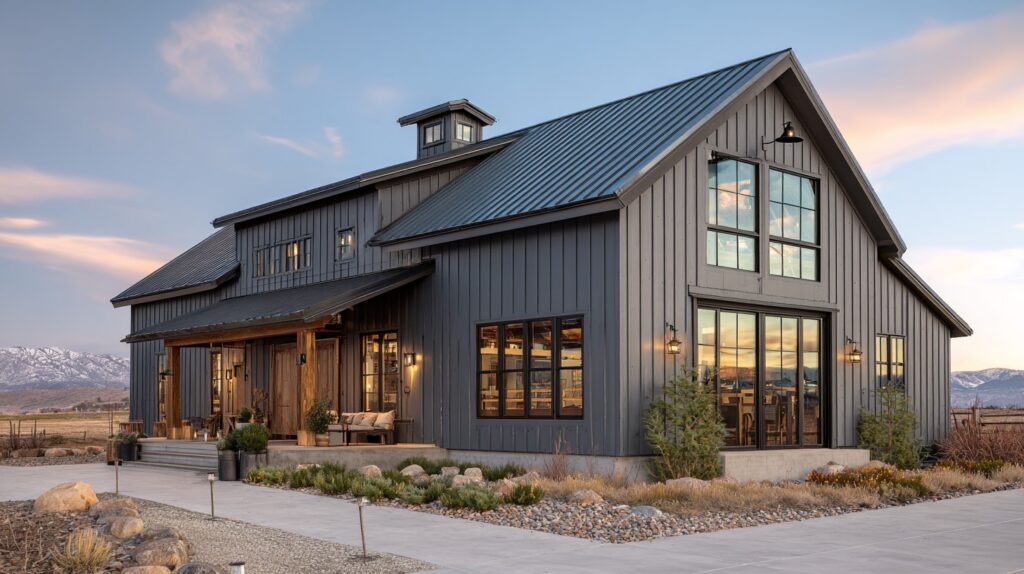

As alternative construction methods become more common, many buyers researching rural, suburban, or semi-custom housing encounter the term post frame home. At the same time, barndominiums are frequently discussed in the same context, which can create confusion. Are post frame homes and barndominiums the same thing, or are they fundamentally different?
This article explains what a post frame home is, how post frame construction works, and how it differs from barndominiums in structure, cost, use, and design flexibility. The goal is to help serious buyers understand the distinctions clearly so they can make informed decisions.
What Is a Post Frame Home?
A post frame home is a residential structure built using post frame construction, a method that relies on large vertical posts set into the ground or mounted on concrete piers to support the building. These posts carry the structural load of the roof and walls, reducing the need for continuous foundations or interior load-bearing walls.
Post frame construction has been used for decades in agricultural buildings, workshops, and commercial structures. In recent years, it has been adapted for residential use, resulting in full-time homes that meet modern building codes.
Core Characteristics of Post Frame Homes
- Large structural posts spaced farther apart than stud framing
- Fewer interior load-bearing walls
- Wide-open interior layouts
- Reduced concrete usage compared to slab or full foundation homes
- Flexible exterior and interior finishes
Post frame homes can be modest single-family residences or larger custom homes depending on design and local regulations.
How Post Frame Construction Works
Instead of relying on continuous perimeter footings, post frame construction distributes loads through strategically placed posts. These posts are either embedded in the ground or attached to engineered concrete piers.
Structural Components
- Posts: Typically pressure-treated wood or engineered laminated columns
- Girts: Horizontal framing members attached to posts
- Trusses: Roof systems spanning between posts
- Sheathing and cladding: Can include metal, wood, fiber cement, or other materials
This approach allows long spans and open interiors while maintaining structural stability.
What Is a Barndominium?
A barndominium is not a specific construction method. It is a building style or use type. The term generally refers to a structure that combines living space with storage, workshop, or garage space, often under one roof.
Barndominiums can be built using several construction methods, including:
- Post frame construction
- Steel frame construction
- Conventional wood framing
In other words, a barndominium describes how a building is used and designed, not how it is structurally built.
Key Differences Between Post Frame Homes and Barndominiums
Construction Method vs Building Type
The most important distinction is this:
- Post frame home: Defined by how it is built
- Barndominium: Defined by how it is designed and used
A barndominium may use post frame construction, but not all post frame homes are barndominiums.
Interior Layout and Use
Post frame homes are typically designed as:
- Full-time residences
- Standard residential floor plans
- Homes without large integrated workspaces
Barndominiums often include:
- Large garages or workshops
- Mixed residential and utility spaces
- Open-plan living adjacent to non-living areas
This difference affects zoning, financing, and resale considerations.
Exterior Appearance
Post frame homes may resemble conventional houses from the outside. They often feature:
- Traditional siding materials
- Residential rooflines
- Standard window and door placements
Barndominiums often maintain a more utilitarian or agricultural appearance, though this is not always the case.
Cost Considerations
Both post frame homes and barndominiums are often discussed as cost-effective options, but actual costs depend on design choices, finishes, and location.
Post Frame Home Costs
Post frame homes can offer cost savings due to:
- Reduced foundation requirements
- Faster construction timelines
- Efficient use of materials
However, residential finishes, insulation, and code compliance can bring total costs closer to conventional homes.
Barndominium Costs
Barndominiums may appear less expensive initially, especially when large portions of the structure are unfinished or used as storage.
Costs increase when:
- Living spaces are fully finished
- Higher-end materials are selected
- Residential energy and safety codes are applied
In many cases, the cost difference between a post frame home and a barndominium narrows once both are finished to similar standards.
Timeline and Construction Process
Post frame construction is often faster than traditional stick-built methods.
Typical timeline advantages include:
- Fewer excavation requirements
- Simplified structural systems
- Ability to build in varied weather conditions
Barndominiums using post frame construction benefit from the same efficiencies, but timelines can vary based on interior complexity.
Pros and Cons
Post Frame Homes: Pros
- Open interior layouts
- Efficient structural design
- Potential cost savings
- Flexible exterior styling
Post Frame Homes: Cons
- Limited contractor familiarity in some regions
- May require additional engineering approval
- Financing can vary by lender
Barndominiums: Pros
- Highly flexible mixed-use layouts
- Ideal for rural or work-from-home lifestyles
- Large clear-span interiors
Barndominiums: Cons
- Zoning restrictions in some areas
- Appraisal challenges
- May not suit traditional neighborhoods
Common Misconceptions
“Post Frame Homes Are Just Barns”
Modern post frame homes are fully engineered residences that meet residential building codes.
“Barndominiums Are Always Cheaper”
Costs depend on finishes, systems, and local requirements, not just building type.
“Post Frame Homes Can’t Look Traditional”
Exterior finishes and design choices largely determine appearance.
Zoning, Permits, and Location Considerations
Local regulations often play a bigger role than construction method.
Buyers should confirm:
- Residential zoning allows post frame construction
- Mixed-use buildings are permitted if considering a barndominium
- Minimum square footage and design standards
Some municipalities regulate barndominiums more strictly than standard homes.
Frequently Asked Questions
Is a post frame home the same as a barndominium?
No. Post frame describes how a building is constructed. Barndominium describes how it is designed and used.
Can a barndominium be built using post frame construction?
Yes. Many barndominiums use post frame construction, but not all do.
Are post frame homes allowed everywhere?
Rules vary by jurisdiction. Some areas have specific design or zoning requirements.
Do post frame homes qualify for traditional mortgages?
Often yes, but lender requirements vary and may depend on local market acceptance.
Final Thoughts
Post frame homes and barndominiums are related but not interchangeable concepts. Post frame construction is a structural method that can be used for many building types, including traditional homes. Barndominiums describe a mixed-use residential style that may or may not use post frame construction.
Understanding this distinction helps buyers evaluate costs, zoning implications, and long-term suitability. Continuing to explore different prefab, modular, and alternative housing options can clarify which approach best fits your land, budget, and lifestyle goals.