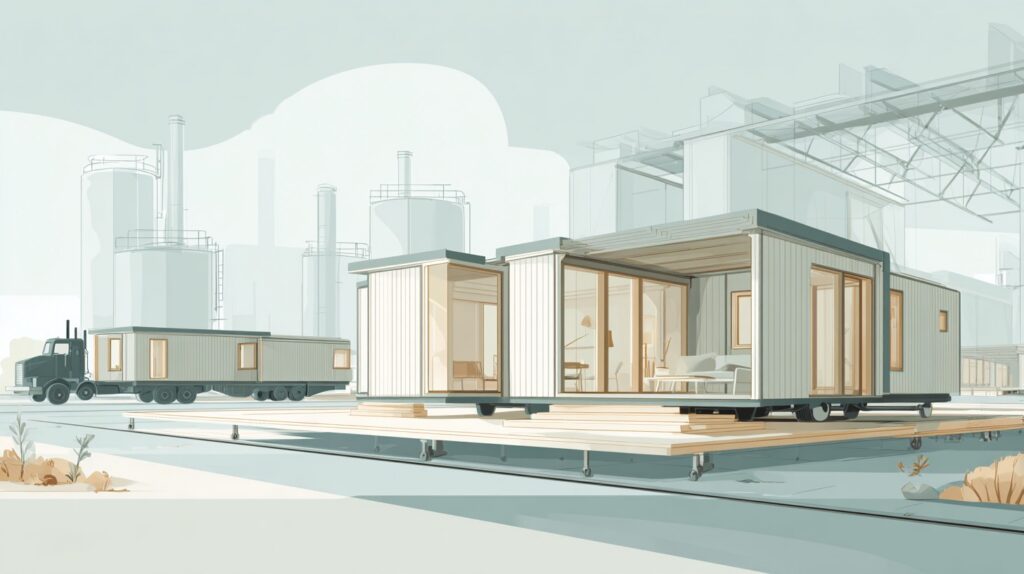

One of the main reasons homeowners consider a prefab ADU is speed. Compared to traditional construction, prefab ADUs are often described as faster and more predictable. Still, many buyers are surprised to learn that the unit itself is only one part of the overall timeline.
This article explains the prefab ADU timeline from order to rental income in clear, realistic terms. It walks through each phase, highlights where delays commonly occur, and explains what factors most influence how quickly an ADU can begin generating income.
Why the Timeline Matters for Prefab ADUs
For homeowners planning to rent an ADU, timeline is not just a scheduling concern. It directly affects:
- Carrying costs such as loans or cash outlay
- When rental income can begin
- Overall return on investment
Understanding the full timeline helps set realistic expectations and reduces frustration when certain phases take longer than expected.
High-Level Timeline Overview
While every project is different, a typical prefab ADU project often follows this broad sequence:
- Planning and feasibility
- Design and ordering
- Permitting and approvals
- Factory production
- Site preparation and foundation
- Delivery and installation
- Utility connections and inspections
- Final approvals and occupancy
- Rental readiness
Some steps overlap, while others must occur sequentially.
Phase 1: Planning and Feasibility
Typical Duration: 2 to 6 weeks
This phase determines whether a prefab ADU is viable on your property.
Key activities include:
- Confirming local ADU zoning rules
- Reviewing lot size, setbacks, and access
- Identifying utility connection requirements
- Assessing delivery feasibility
Homeowners who skip this step often encounter delays later. Working with prefab ADU providers that serve your area helps surface feasibility issues early.
Phase 2: Design Selection and Ordering
Typical Duration: 2 to 4 weeks
Once feasibility is confirmed, homeowners select a prefab ADU model and finalize options.
This phase may include:
- Selecting a floor plan
- Choosing finishes and upgrades
- Confirming system options such as HVAC and appliances
- Reviewing site-specific design adjustments
Highly customized units may extend this phase due to additional engineering and review.
Phase 3: Permitting and Approvals
Typical Duration: 1 to 4 months
Permitting is often the longest and most variable part of the prefab ADU timeline.
Approvals may include:
- Planning or zoning review
- Building permit issuance
- Utility approvals
- Design review, if required
Some jurisdictions have streamlined ADU processes, while others move slowly. Even with prefab construction, this phase depends almost entirely on local regulations.
Why Prefab Does Not Eliminate Permitting Time
Prefab ADUs still require full compliance with zoning, building, and safety codes. Factory construction does not bypass local approval processes.
Phase 4: Factory Production
Typical Duration: 1 to 3 months
Once permits are in place or sufficiently advanced, factory production begins.
This phase includes:
- Structural framing
- Interior systems installation
- Finishes and fixtures
- Quality control inspections
Factory schedules depend on backlog, customization level, and builder capacity.
Phase 5: Site Preparation and Foundation
Typical Duration: 3 to 6 weeks
Site work often overlaps with factory production.
Key tasks include:
- Grading and excavation
- Foundation construction
- Utility trenching and stubs
Site complexity and weather can affect this phase significantly.
Phase 6: Delivery and Installation
Typical Duration: 1 to 5 days
This is the most visible part of the prefab ADU process.
Delivery typically includes:
- Transportation from the factory
- Crane or placement equipment
- Setting the unit on the foundation
While installation is fast, it is highly dependent on access conditions and coordination.
Phase 7: Utility Connections and On-Site Finishing
Typical Duration: 2 to 6 weeks
After installation, local crews complete:
- Utility hookups
- Interior seam finishing
- Exterior siding or roofing work
- Steps, ramps, or decks
This phase is influenced by local labor availability and inspection scheduling.
Phase 8: Inspections and Certificate of Occupancy
Typical Duration: 1 to 3 weeks
Local building departments inspect the completed ADU.
Inspections typically cover:
- Structural and foundation work
- Electrical and plumbing systems
- Life safety requirements
Once approved, the jurisdiction issues a certificate of occupancy or equivalent approval.
Phase 9: Preparing for Rental Income
Typical Duration: 2 to 4 weeks
With approvals in place, the ADU can be prepared for rental.
This may include:
- Furnishing the unit
- Setting rental pricing
- Advertising or listing the unit
- Tenant screening
Some homeowners choose to complete this work while inspections are underway.
Typical Total Timeline: Start to Rental
When all phases are combined, many prefab ADU projects fall within these general ranges:
- Fast-moving jurisdictions: approximately 6 to 9 months
- Average conditions: approximately 9 to 14 months
- Complex sites or slow approvals: 14 months or longer
Permitting speed and site complexity are the largest drivers of variation.
Cost and Timeline Tradeoffs
Shorter timelines often require:
- Higher upfront coordination costs
- Experienced local teams
- Fewer design changes mid-process
Delays can increase total cost by extending financing, labor, or opportunity costs.
Pros and Cons of Prefab ADU Timelines
Advantages
- Shorter on-site construction time
- More predictable factory schedules
- Reduced weather-related delays
Tradeoffs
- Permitting timelines remain unpredictable
- Delivery logistics require careful planning
- Customization can extend schedules
Common Timeline Misconceptions
“Prefab ADUs are instant.”
They are faster to build, not instant to approve.
“Ordering the unit starts the clock.”
Permits and site work often begin earlier.
“Rental income starts right after delivery.”
Inspections and occupancy approval must come first.
How to Shorten the Timeline Where Possible
Homeowners can improve timelines by:
- Confirming zoning rules early
- Choosing standard designs
- Working with builders active in their area
- Preparing the site in parallel with factory production
Frequently Asked Questions
What phase usually takes the longest?
Permitting and approvals are typically the longest phase.
Can factory production start before permits are issued?
Some builders allow partial progress, but policies vary.
Does prefab guarantee faster rental income?
It improves predictability, but local approvals still govern timing.
Is the timeline shorter for detached ADUs?
Not always. Site and jurisdiction matter more than attachment type.
Final Thoughts
A prefab ADU can shorten the path to rental income, but only when the full process is understood. Factory construction speeds up one part of the journey, while zoning, permitting, and site work still shape the overall timeline.
Homeowners who plan each phase carefully and work with providers familiar with local requirements are best positioned to move from order to occupancy with fewer surprises.