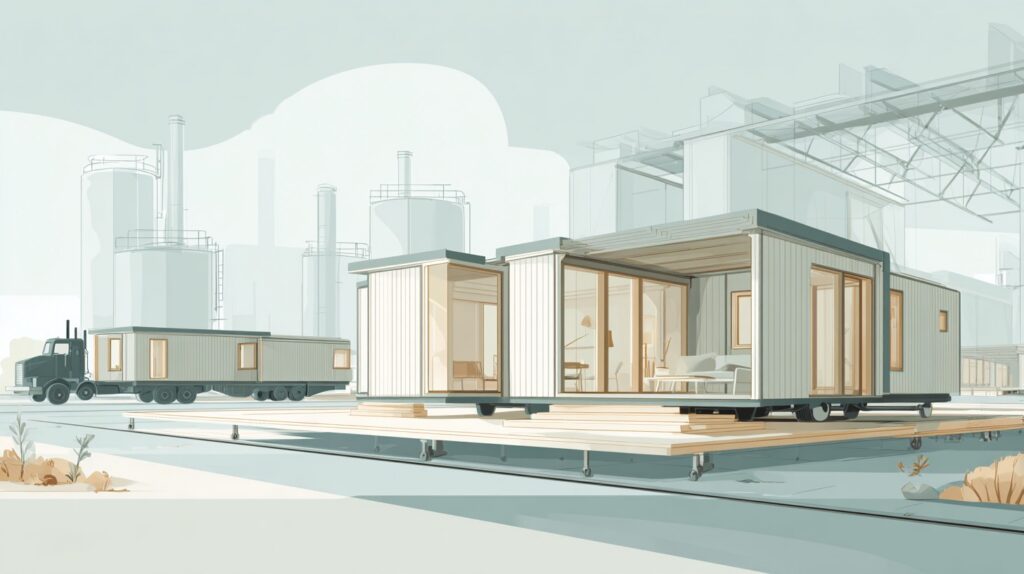
Is a prefab home a good investment or rental property? The answer depends on location, property type, financing structure, and long-term strategy. Prefabricated homes can offer cost control, faster build timelines, and flexible design options, which may appeal to both homeowners and real estate investors. However, returns are influenced more by land value, zoning rules, and market demand than by construction method alone.
For buyers considering a prefab home as a primary residence, long-term hold, short-term rental, or accessory dwelling unit (ADU), it is important to evaluate both financial and regulatory factors carefully.
Understanding What “Prefab” Means in an Investment Context
Prefab is a broad category that includes modular homes, manufactured homes, panelized systems, and certain kit homes. Investment potential varies significantly across these types.
Modular Homes
Modular homes are built in sections in a factory and installed on permanent foundations. They must meet the same local building codes as site-built homes. In many markets, modular homes are appraised similarly to traditional construction when properly installed.
Manufactured Homes
Manufactured homes are built to federal HUD standards and may be installed on permanent or non-permanent foundations. Appreciation patterns can vary depending on land ownership and financing structure.
Accessory Dwelling Units (ADUs)
Prefab ADUs are often used to generate rental income on existing residential properties. Local zoning plays a major role in determining feasibility.
Cost Considerations
Investment performance starts with acquisition cost. Prefab homes can offer predictable pricing, but total project cost includes more than the factory-built structure.
Common Cost Components
- Land purchase
- Factory home price
- Transportation and crane fees
- Foundation installation
- Utility hookups
- Permits and inspections
- Site preparation
In some regions, infrastructure costs such as wells, septic systems, or long utility runs can significantly increase total investment.
Using structured tools like PrefabNearMe can help investors compare modular homes, ADUs, and other prefab options in their region before requesting quotes.
Timeline and Speed to Market
One potential investment advantage of prefab homes is faster on-site construction. Because the home is built in a factory while site work occurs simultaneously, total build time may be reduced compared to conventional framing.
However, the overall timeline includes:
- Design and engineering approval
- Permit processing
- Foundation installation
- Factory production
- Delivery and installation
- Interior and exterior finishing
In competitive rental markets, shorter construction timelines may reduce carrying costs.
Appreciation and Resale Value
Whether a prefab home appreciates depends largely on:
- Location and land value
- Quality of installation
- Local demand
- Property classification
Modular homes installed on permanent foundations typically appreciate in line with surrounding properties when maintained properly. Manufactured homes placed on leased land may behave differently.
As with any real estate investment, location often outweighs construction method.
Rental Income Potential
Prefab homes are increasingly used as long-term rental units, short-term vacation rentals, and backyard ADUs.
Long-Term Rentals
In many suburban and rural areas, modular homes function similarly to site-built homes as rental properties. Tenant demand usually depends on school districts, employment access, and neighborhood quality.
Short-Term Rentals
In vacation markets, smaller prefab cabins or modern modular homes may perform well as short-term rentals. However, local regulations often limit this use.
ADU Rental Strategy
Prefab ADUs can provide supplemental income while increasing property utility. Zoning rules determine whether detached units are allowed and whether separate utility meters are required.
Zoning and Permit Considerations
Investment feasibility often depends on local land-use regulations. Important questions include:
- Are modular homes permitted in the zoning district?
- Are manufactured homes restricted?
- Are ADUs allowed?
- Is short-term rental permitted?
Some municipalities regulate exterior appearance, foundation type, or minimum square footage. Confirming these requirements before purchasing a prefab system is essential.
Financing and Lending
Lending terms can influence investment viability. Modular homes on permanent foundations are often eligible for conventional mortgages. Manufactured homes may require specialized loans depending on installation type.
Investors should consult lenders early to understand qualification requirements and appraisal standards.
Pros and Cons of Prefab as an Investment
Potential Advantages
- Predictable construction pricing
- Reduced on-site build time
- Flexible design options
- Suitable for infill lots and rural land
Potential Limitations
- Transportation logistics
- Infrastructure costs
- Local zoning restrictions
- Market perception differences in some regions
Returns depend on purchase price discipline and rental demand rather than the prefab label itself.
Common Misconceptions
“Prefab homes always cost less.”
Total project cost can vary widely depending on site conditions and finishes.
“Prefab homes do not appreciate.”
Modular homes installed on permanent foundations often appreciate similarly to comparable site-built homes, depending on market conditions.
“You can place a rental prefab anywhere.”
Zoning, setback, and rental regulations frequently apply.
Risk Factors to Evaluate
Before investing, consider:
- Local rental demand trends
- Exit strategy and resale comparables
- Insurance costs
- Maintenance requirements
Prefab construction does not eliminate typical real estate investment risks.
Frequently Asked Questions
Do modular homes qualify for traditional mortgages?
Often yes, if installed on permanent foundations and meeting local building codes.
Are prefab homes good for Airbnb?
It depends on local short-term rental regulations and tourism demand.
Is a prefab ADU a good way to increase property value?
In areas where ADUs are permitted, they can add usable space and rental income potential.
Do prefab homes depreciate faster?
Depreciation patterns depend on classification, foundation type, and land ownership structure.
Final Thoughts
A prefab home can be a viable investment or rental property when evaluated carefully. Construction method is only one factor. Location, zoning compliance, total project cost, and rental demand ultimately determine performance.
Continuing to research regional regulations and comparing local prefab options through structured tools like PrefabNearMe can help investors make more informed decisions aligned with their financial goals.