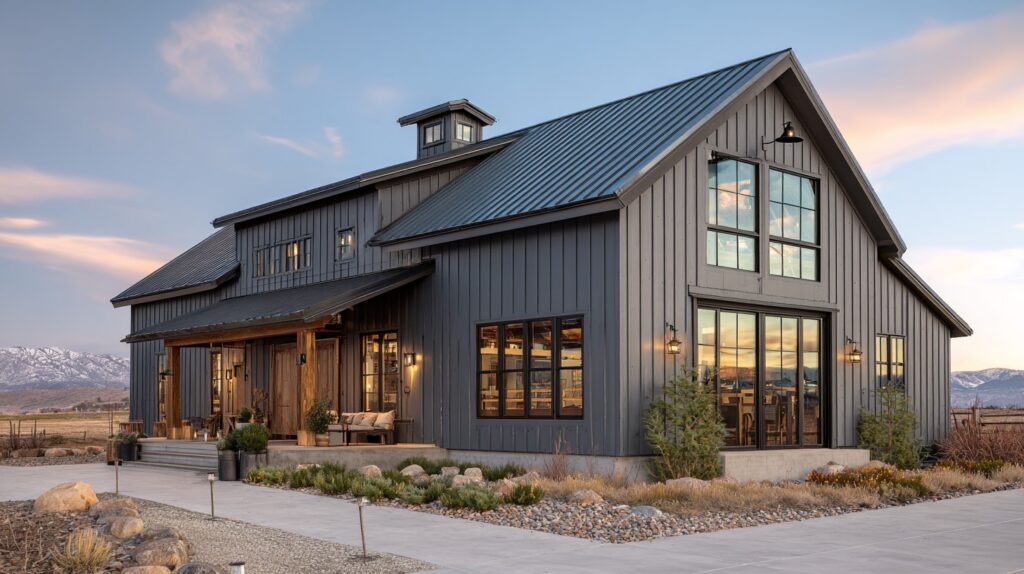

Barndominiums are often presented as a flexible, cost-effective alternative to traditional homes—but much of the public conversation focuses on best-case scenarios. For buyers seriously considering this type of build, the more important question isn’t whether barndominiums are “good” or “bad,” but what the real advantages and tradeoffs are once the marketing is stripped away.
This article takes a practical, homeowner-focused look at the pros and cons of barndominiums, including considerations that are sometimes glossed over during early conversations with builders or kit providers.
What Is a Barndominium (Brief Context)
A barndominium is typically a residential home built using a steel or post-frame structure—often adapted from agricultural or utility building systems—and finished to residential standards. While some start as prefabricated metal shells, others are fully custom structures designed from the ground up.
Because barndominiums sit at the intersection of agricultural construction and residential housing, they come with both unique benefits and unique challenges.
The Pros of Barndominiums
1. Open, Flexible Floor Plans
One of the most genuine advantages of a barndominium is structural flexibility. Steel or post-frame construction allows for wide, open spans with fewer load-bearing walls.
- Easier customization of interior layouts
- Simpler future renovations or reconfigurations
- Ideal for large living areas, workshops, or mixed-use spaces
This flexibility is especially appealing to buyers who want non-traditional layouts or combined living and work spaces.
2. Durable Structural Systems
Steel framing is resistant to many issues that affect wood-framed homes, including termites, rot, and some moisture-related damage. When properly engineered, barndominiums can also perform well in high-wind or snow-load regions.
Durability, however, depends heavily on design quality and proper detailing.
3. Potential Construction Speed Advantages
The shell of a barndominium can often be erected faster than a traditional framed house. For some projects, this reduces:
- Initial labor time
- Exposure to weather delays
- Early-stage construction risk
That said, interior build-out timelines often resemble conventional homes.
4. Exterior Maintenance Can Be Lower
Metal siding and roofing typically require less maintenance than wood-based exterior materials. There’s no need for repainting or sealing at the same frequency, which can reduce long-term upkeep costs.
The Cons Builders Often Downplay
1. Interior Costs Add Up Quickly
While the shell may be economical, the interior of a barndominium is essentially a custom home. Costs that are often underestimated include:
- Residential-grade insulation systems
- Interior framing and drywall
- Electrical and plumbing routed through steel
- Heating and cooling design for large open volumes
Once finished to comparable standards, total costs may approach—or match—traditional construction.
2. Sound and Thermal Performance Require Extra Planning
Steel buildings behave differently than wood-framed homes. Without careful design:
- Sound can travel more easily
- Temperature swings may be more noticeable
- Condensation issues can occur
High-performance insulation and proper vapor control are not optional; they are essential.
3. Financing Can Be More Complicated
Many lenders are unfamiliar with barndominiums or treat them as non-standard construction. This can result in:
- More documentation requirements
- Higher down payments
- Appraisal challenges due to limited comparable sales
Buyers often need construction loans or specialized lenders, which can slow the process.
4. Zoning and Permitting Are Not Guaranteed
Local zoning codes do not always clearly address barndominiums. Common hurdles include:
- Restrictions on metal buildings in residential zones
- Minimum roof pitch or exterior material requirements
- Confusion between agricultural and residential classifications
Assuming approval without written confirmation is a common—and costly—mistake.
5. Resale Can Be Less Predictable
Barndominiums tend to perform best in markets where they are already familiar. In areas where buyers expect conventional homes, resale value may depend heavily on:
- Finish quality
- Location
- How “residential” the home feels
Highly customized layouts can further narrow the buyer pool.
Hidden Tradeoffs Buyers Often Discover Late
Utility and Infrastructure Costs
Many barndominiums are built on rural land, where buyers may need to budget for:
- Septic systems
- Well drilling
- Long utility runs
- Road access improvements
These costs are unrelated to the building itself but significantly affect total project budgets.
Builder Experience Varies Widely
Not all builders who erect metal shells have experience finishing residential interiors. Coordination gaps between shell providers and interior contractors can lead to delays, rework, or design compromises.
Who Barndominiums Tend to Work Best For
Barndominiums are often a good fit for buyers who:
- Own or plan to buy rural or semi-rural land
- Value open layouts over traditional room divisions
- Are comfortable managing custom build decisions
- Understand local zoning and permitting requirements early
They may be less suitable for buyers seeking a turnkey experience or building in tightly regulated residential areas.
Frequently Asked Questions
Are barndominiums cheaper to maintain?
Exterior maintenance is often lower, but energy efficiency and HVAC costs depend heavily on insulation quality and design.
Do barndominiums meet residential building codes?
They can, but compliance depends on engineering, insulation, and local code interpretation.
Can barndominiums look like traditional homes?
Yes. Exterior finishes, rooflines, and interior design choices greatly influence appearance.
Are barndominiums considered prefab homes?
Some use prefabricated components, but many are custom-built and don’t fit neatly into prefab or modular categories.
Final Thoughts
Barndominiums offer real advantages—but they are not shortcuts to inexpensive or simple homeownership. Their success depends on thoughtful design, realistic budgeting, and a clear understanding of local regulations.
For buyers researching prefab homes, modular homes, or alternative housing options near them, barndominiums are best evaluated as one tool among many—not as a universal solution. Continuing to compare approaches, builders, and local requirements leads to better long-term outcomes.