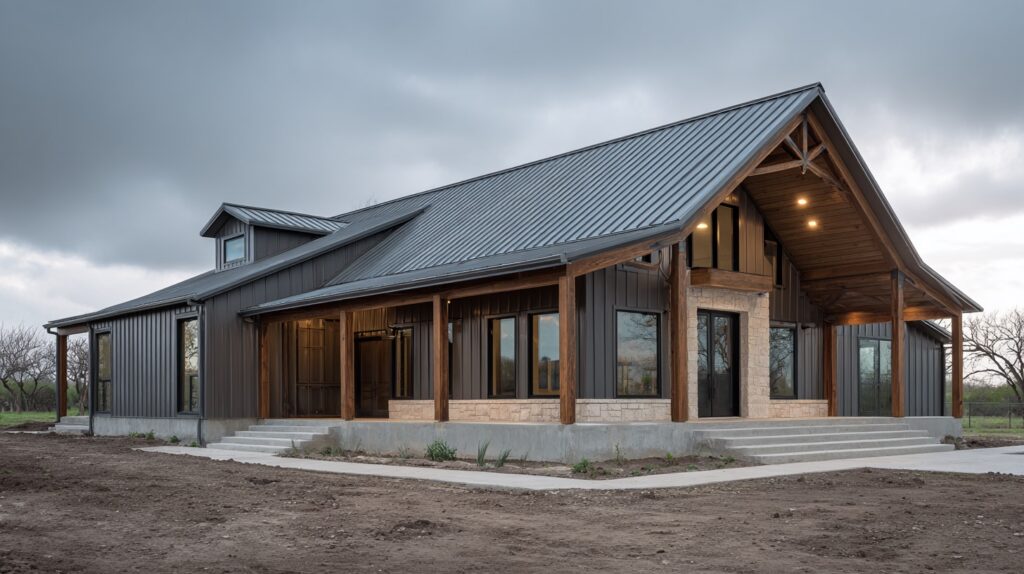

As more homeowners explore alternatives to traditional wood framing, steel frame homes are gaining attention for their performance in extreme conditions. A common question is how steel frame homes actually perform during fires, high winds, and earthquakes. These concerns matter whether you are building in a wildfire-prone region, a hurricane zone, or an area with seismic activity.
This article explains how steel frame homes respond to these forces, where they tend to perform well, where limitations exist, and what homeowners should realistically expect. The goal is to provide clear, practical information rather than marketing claims.
What Makes Steel Frame Homes Structurally Different?
Steel frame homes use cold-formed, galvanized steel studs and structural members instead of dimensional lumber. These components are manufactured to precise tolerances and assembled either on-site or in factory-built prefab or modular systems.
Key characteristics of steel framing include:
- High strength-to-weight ratio
- Consistent material properties
- Non-combustible framing members
- Resistance to rot, insects, and warping
How these characteristics translate into real-world performance depends on the specific hazard involved.
Steel Frame Homes and Fire Performance
Non-Combustible Framing
One of the most cited advantages of steel frame homes is that steel does not burn. Unlike wood, steel framing does not contribute fuel to a fire.
This means:
- Steel studs will not ignite or spread flames
- Structural framing is less likely to be consumed during a fire
- Fire spread may be slower when framing materials are non-combustible
However, it is important to understand that a home is not fireproof simply because it uses steel framing.
Heat and Structural Integrity
While steel does not burn, it can lose strength at high temperatures. Prolonged exposure to extreme heat can cause steel to soften or deform.
In residential construction, this risk is managed through:
- Fire-rated drywall assemblies
- Insulation designed to slow heat transfer
- Building code requirements for fire resistance
These protective layers are similar to those used in wood frame homes but are especially important for steel structures.
Wildfire Considerations
In wildfire-prone areas, steel framing can be an advantage, but it is only one part of the overall fire strategy.
Other factors often matter more, including:
- Roofing materials
- Exterior siding and cladding
- Window and vent design
- Defensible space around the home
Steel framing reduces one source of ignition, but it does not eliminate fire risk on its own.
Steel Frame Homes in High Wind Conditions
Strength-to-Weight Ratio
Steel framing has a high strength-to-weight ratio, which allows it to resist wind forces effectively when properly engineered.
In high-wind regions, steel frame homes can offer:
- Strong connections between framing members
- Consistent load paths from roof to foundation
- Reduced risk of material failure due to knots or defects
This consistency can be particularly useful in hurricane or tornado-prone areas.
Connection and Anchoring Matter
Wind performance depends heavily on how the structure is connected and anchored, not just the framing material.
Key elements include:
- Anchor bolts and hold-downs at the foundation
- Hurricane ties and steel connectors
- Roof-to-wall and wall-to-floor connections
A poorly connected steel frame home will not perform better than a well-built wood frame home.
Prefab and Modular Advantages
Prefab and modular steel frame homes are often built with tighter tolerances and tested connection systems.
This can result in:
- More predictable wind performance
- Reduced on-site construction variability
- Better quality control
These benefits depend on the builder and the specific system used.
Steel Frame Homes and Earthquake Performance
Flexibility vs Rigidity
Earthquake performance is not just about strength. It is about how a structure moves and dissipates energy.
Steel framing offers:
- Ductility, meaning it can bend without breaking
- Predictable behavior under stress
- Reduced risk of sudden brittle failure
This ductility can be an advantage during seismic events.
Lightweight Construction
Steel frame homes are generally lighter than masonry or concrete structures.
Lighter buildings experience:
- Lower seismic forces during ground movement
- Reduced stress on foundations
- Less inertia compared to heavier construction
This can contribute to improved earthquake performance when combined with proper design.
Importance of Engineering and Shear Systems
As with wind resistance, earthquake performance depends heavily on engineering.
Critical components include:
- Shear walls or braced frames
- Foundation connections
- Load path continuity
Steel framing alone does not guarantee seismic safety. The entire structural system must be designed for seismic forces.
Cost Considerations Related to Disaster Performance
Steel frame homes may have slightly higher upfront costs, but disaster-related performance can influence long-term expenses.
Potential cost-related benefits include:
- Reduced fire damage to structural framing
- Lower likelihood of structural repairs after storms
- Potential insurance advantages in some regions
These benefits vary by location, insurer, and specific design.
Timeline and Construction Process
Steel frame homes can be built on similar timelines to wood frame homes, especially in prefab or modular construction.
Factors that influence timelines include:
- Availability of experienced contractors
- Local permitting familiarity with steel framing
- Level of customization
Disaster-resistant design may add planning time but does not always extend construction schedules significantly.
Pros and Cons of Steel Frame Homes in Extreme Conditions
Pros
- Non-combustible framing
- Consistent structural performance
- Good strength-to-weight ratio
- Ductile behavior during earthquakes
- Resistance to pests and rot
Cons
- Steel can lose strength at very high temperatures
- Requires proper fire-rated assemblies
- Performance depends heavily on engineering and connections
- Higher upfront planning and material costs in some cases
Common Misconceptions
“Steel Frame Homes Are Fireproof”
Steel framing does not burn, but homes still require fire-resistant assemblies and materials.
“Steel Automatically Means Better Disaster Performance”
Design, engineering, and construction quality matter as much as the framing material.
“Steel Homes Don’t Need Special Codes or Permits”
Steel frame homes must still meet all local building and safety codes.
Zoning, Permits, and Local Regulations
Most jurisdictions allow steel frame homes under standard residential building codes.
However:
- Some inspectors may request additional documentation
- Engineering reviews may be more detailed
- Prefab and modular approvals vary by state
These factors affect planning more than structural performance.
Frequently Asked Questions
Are steel frame homes safer in fires than wood frame homes?
Steel framing does not burn, but overall fire safety depends on the entire building system.
Do steel frame homes perform better in hurricanes?
They can perform very well when properly engineered and anchored.
Are steel frame homes good for earthquake zones?
Steel’s ductility and lightweight nature can be advantageous in seismic regions.
Does steel framing guarantee disaster resistance?
No. Performance depends on design, connections, and construction quality.
Final Thoughts
Steel frame homes generally perform well in fire, wind, and earthquake conditions when designed and built correctly. Their non-combustible nature, strength, and ductility offer real advantages, but these benefits are only realized as part of a well-engineered system.
For homeowners considering steel frame construction, the most important step is to evaluate the full design, builder experience, and local requirements. Continuing to research different prefab and modular options can help determine whether steel framing aligns with your safety priorities and long-term goals.