
If you are considering a modular home, one of the first questions you will likely ask is how long the process actually takes. Modular homes are often described as faster than traditional construction, but the timeline is not instantaneous and it is not the same in every location.
This article explains how long it takes to build a modular home from initial planning to move-in, what happens at each stage, and what factors most often speed things up or slow them down. The goal is to give realistic expectations rather than best-case scenarios.
The Short Answer: What Most Buyers Can Expect
From first planning steps to move-in, a modular home typically takes six to twelve months. Some projects move faster, while others take longer due to permitting, site conditions, or customization.
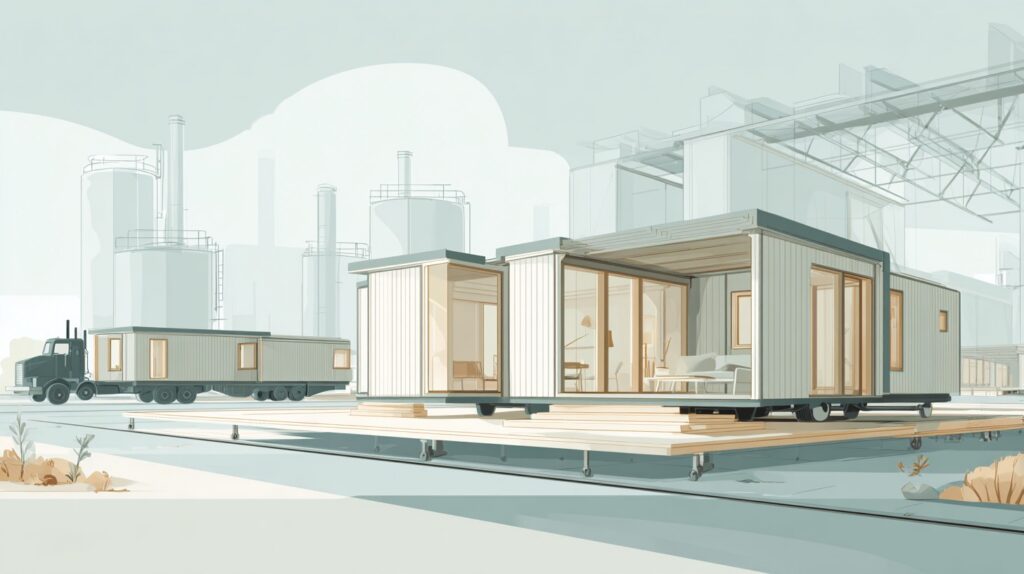
The key difference from traditional construction is that much of the home is built in a factory while site work happens at the same time. This overlap often shortens the total timeline, but it does not eliminate planning, approvals, or finishing work.
Why Modular Homes Can Be Faster Than Traditional Builds
Modular homes are built using a parallel process rather than a fully sequential one.
- The home is built indoors at a factory.
- The foundation and site work happen at the same time.
- Weather delays are reduced during structural construction.
This structure is why modular homes are often completed sooner than site-built homes, especially in regions with long winters or heavy rainfall.
The Modular Home Timeline Step by Step
Step 1: Planning, Design, and Budgeting (1 to 2 months)
This phase begins once you decide to pursue a modular home. It often includes:
- Selecting a modular home builder or manufacturer
- Choosing a floor plan and customization options
- Confirming budget and financing approach
- Initial site evaluation
Buyers who make decisions quickly and select standard plans tend to move through this phase faster. Custom layouts or complex sites often extend it.
Step 2: Zoning Review and Permits (1 to 3 months)
Permitting is one of the most variable parts of the timeline.
Modular homes must comply with local zoning and building codes, just like traditional homes. Common approvals include:
- Zoning confirmation or land-use approval
- Building permits
- Foundation permits
- Septic or well permits if applicable
Some jurisdictions are very familiar with modular homes. Others require additional documentation or review time. This step often determines whether a project finishes closer to six months or closer to a year.
Step 3: Factory Construction (6 to 10 weeks)
Once permits are in place and contracts are finalized, factory construction begins.
Inside the factory, the modules are built under controlled conditions. Typical work includes:
- Floor, wall, and roof framing
- Plumbing and electrical rough-ins
- Insulation and drywall
- Windows, doors, and some finishes
Because weather does not interrupt this phase, factory construction timelines are usually consistent.
Step 4: Site Preparation and Foundation (4 to 8 weeks)
While the home is being built in the factory, site work usually happens in parallel.
This phase may include:
- Clearing and grading
- Excavation
- Foundation construction
- Utility trenching
The foundation must be completed and inspected before modules can be delivered. Delays here are common if weather is poor or if soil conditions require engineering changes.
Step 5: Delivery and Set (1 to 3 days)
This is often the most visible part of the process.
Modules are delivered by truck and placed on the foundation using a crane. For many buyers, this is when the home suddenly looks complete.
Delivery timing depends on:
- Road access and turning radius
- Overhead obstacles like power lines or trees
- Weather and crane availability
Step 6: On-Site Finishing and Inspections (4 to 10 weeks)
After the modules are set, on-site work begins. This phase often takes longer than buyers expect.
Typical tasks include:
- Connecting modules and sealing the structure
- Completing roofing and siding
- Interior finish work at module seams
- Utility hookups
- Final inspections and occupancy approval
This stage determines when the home is truly ready for move-in.
Total Timeline Summary
- Planning and permits: 2 to 5 months
- Factory build: 1.5 to 2.5 months
- Site work and foundation: 1 to 2 months
- Set and finishing: 1 to 2.5 months
Many projects overlap phases, which is why total time is shorter than adding these numbers straight across.
What Can Slow Down a Modular Home Build?
Even though modular homes are efficient, delays still happen.
Permitting Delays
Local approval timelines vary widely. Some municipalities process permits in weeks, others in months.
Site Complexity
Steep slopes, poor soil, long driveways, or difficult utility access can extend foundation and prep work.
Customization
Highly customized designs may require additional engineering or longer factory scheduling.
Weather During Site Work
While factory work is protected, foundation and utility work are still weather-dependent.
How Modular Timelines Compare to Traditional Homes
Traditional site-built homes often take nine to eighteen months, especially when weather and labor availability are factors.
Modular homes tend to:
- Finish faster overall
- Have fewer weather-related delays
- Offer more predictable construction schedules
That said, permitting timelines can narrow the difference in some regions.
Cost and Timeline Are Connected
Faster timelines can reduce certain costs such as construction loan interest and temporary housing. However, speed alone does not guarantee lower total cost.
Buyers should still budget for:
- Site preparation
- Utility connections
- Permits and inspections
These costs exist regardless of build speed.
Common Misconceptions About Modular Home Timelines
“Modular homes are move-in ready in a few weeks.”
The factory build may be quick, but permits, foundations, and finishing still take time.
“Once the modules arrive, the house is done.”
On-site finishing and inspections are still required.
“Modular homes avoid all delays.”
They reduce some delays but do not eliminate local or site-specific ones.
Zoning and Location-Specific Factors
Modular homes are subject to the same zoning rules as site-built homes.
Local factors that influence timelines include:
- Minimum square footage requirements
- Design review processes
- Foundation type rules
- Regional inspection schedules
This is why buyers searching for modular homes near them should involve local officials early.
Pros and Cons of Modular Home Timelines
Advantages
- Shorter total build time in many cases
- Less weather exposure during construction
- More predictable factory scheduling
Tradeoffs
- Upfront planning required
- Delivery logistics must be coordinated carefully
- Permits still govern overall timing
Frequently Asked Questions
Can a modular home be built in under six months?
Sometimes, but this usually requires quick permitting, a simple site, and a standard design.
What is the longest part of the modular home process?
Permitting and site work are often the biggest variables.
Do modular homes take less time than prefab or panelized homes?
Often yes, because more work is completed in the factory.
Does financing affect the timeline?
Yes. Construction loan approval and draw schedules can influence start dates.
Final Thoughts
Building a modular home is typically faster than traditional construction, but it is still a multi-phase process that requires planning, approvals, and coordination. Understanding where time is saved and where delays can occur helps set realistic expectations.
For buyers exploring modular homes, prefab homes, ADUs, or alternative housing options near them, comparing timelines alongside cost, site conditions, and local regulations is the best way to decide whether modular construction fits their goals.